

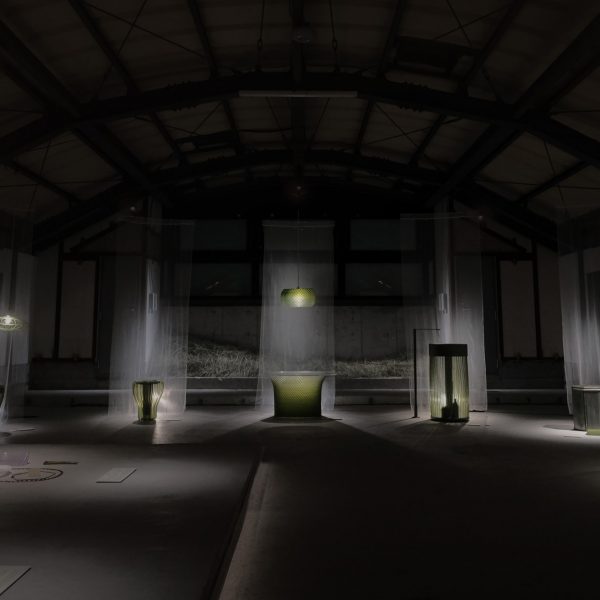
At Designart Tokyo, Japanese layout collective Honoka exhibited furniture and lights built by 3D printing a material made from discarded Tatami mats.
The exhibition – titled Tatami Refab Task – exhibited lampshades, lights fixtures, tables, stools, basins and plant holders that appeared to glow many thanks to the translucency of the content, which was manufactured from grass and resin.
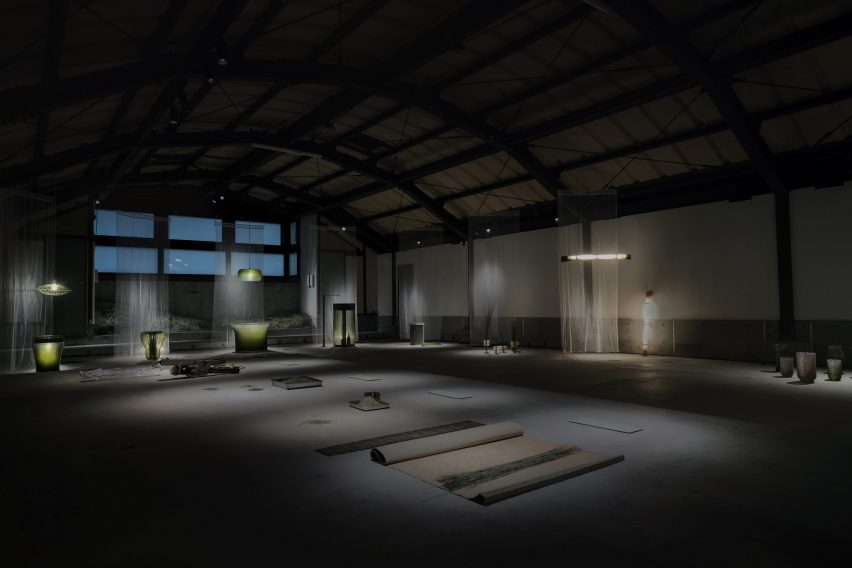
“Honoka has produced a distinctive material by mixing biodegradable resin with Igusa grass, which is extracted from Japanese discarded Tatami mats,” reported Honoka.
“Working with ExtraBold’s significant 3D printer, the undertaking proposes home furnishings that re-weaves Tatami into fashionable everyday living.”
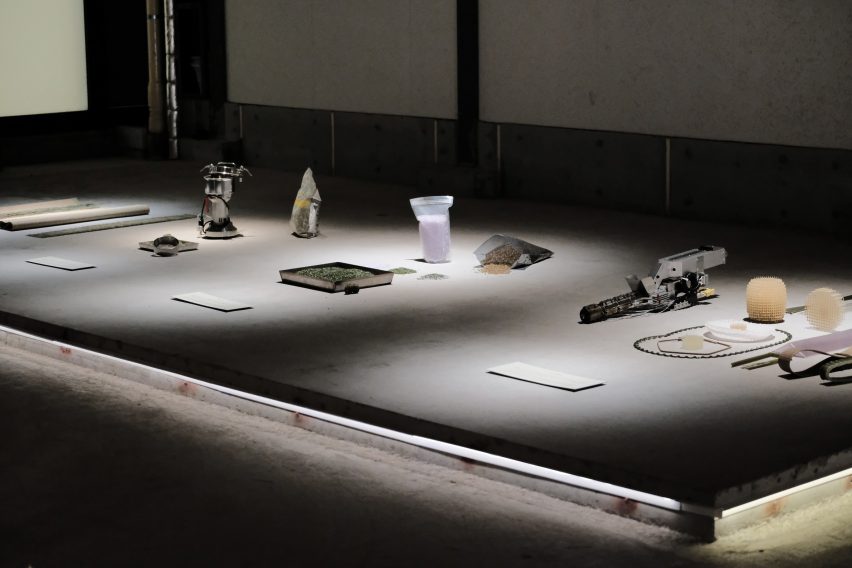
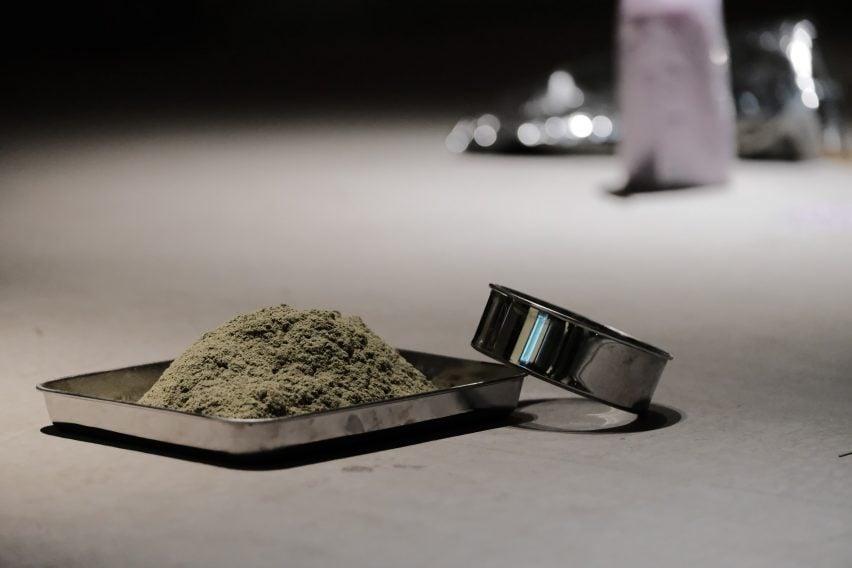
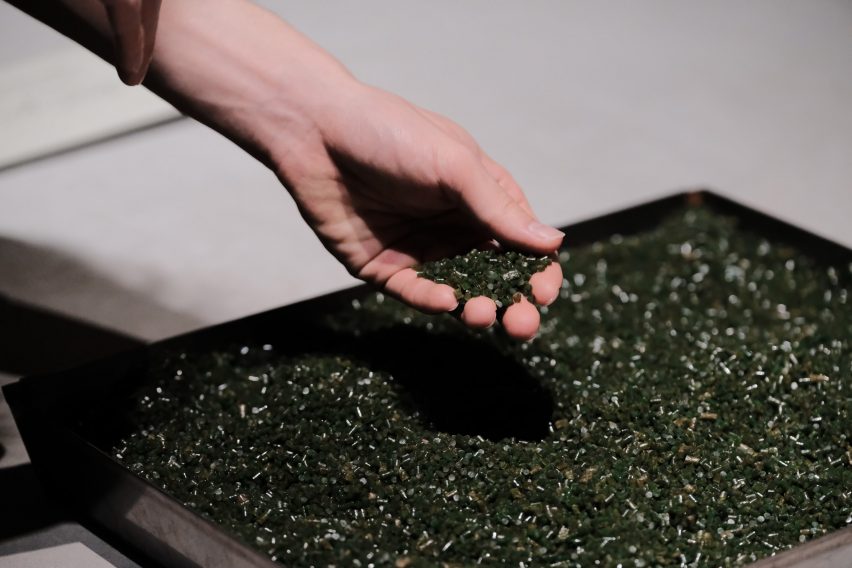
The Igusa grass is cut from the mats and ground up, right before being blended with biodegradable resin.
The resulting pellets were fed by means of a substantial-structure 3D printer and assembled to create a array of useful homewares and items.
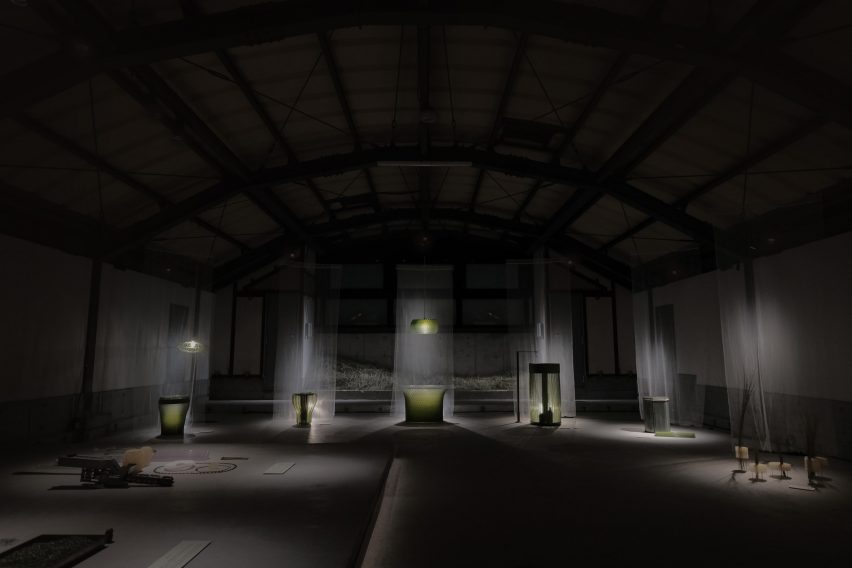
Each piece in the exhibition is 3D printed, nevertheless all have a woven, lattice or knitted impact reminiscent of regular Japanese craft methods.
The pieces were coloured beige, very clear, environmentally friendly and lilac, with an additional dimensional excellent based on how light-weight filters via many thanks to their semi-transparency.
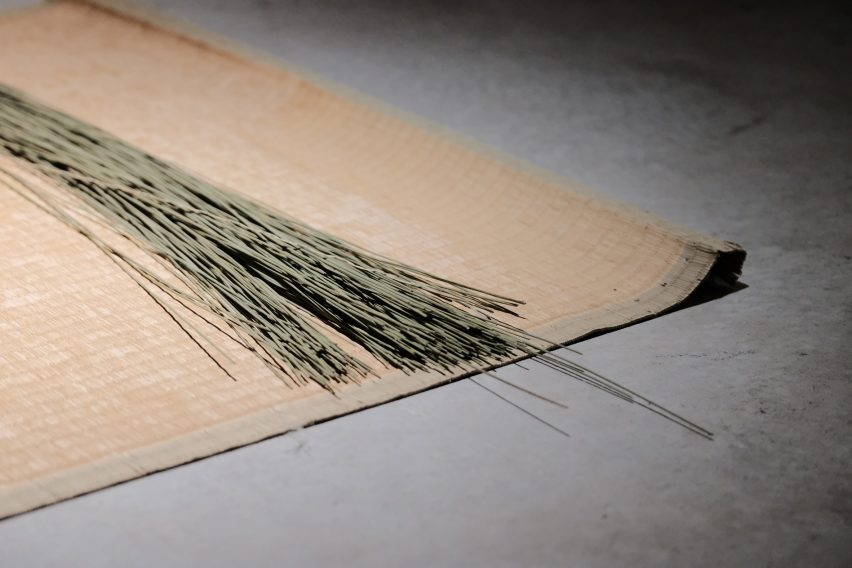
Tatami is a standard design of mat created from lengths of dried Igusa grass that have been utilised in Japanese interiors for hundreds of years.
The mats were well-known thanks to their means to handle humidity and minimize odours in interior spaces.
The reputation of Tatami mats has viewed a decline in current yrs, which prompted Honoka to consider how the mats could be repurposed and reintroduced into contemporary interiors.
The outcome was a sequence of useful objects and furnishings that reference the frond-like visual appeal of Igusa grass, as nicely as time-honoured Japanese craft tactics.
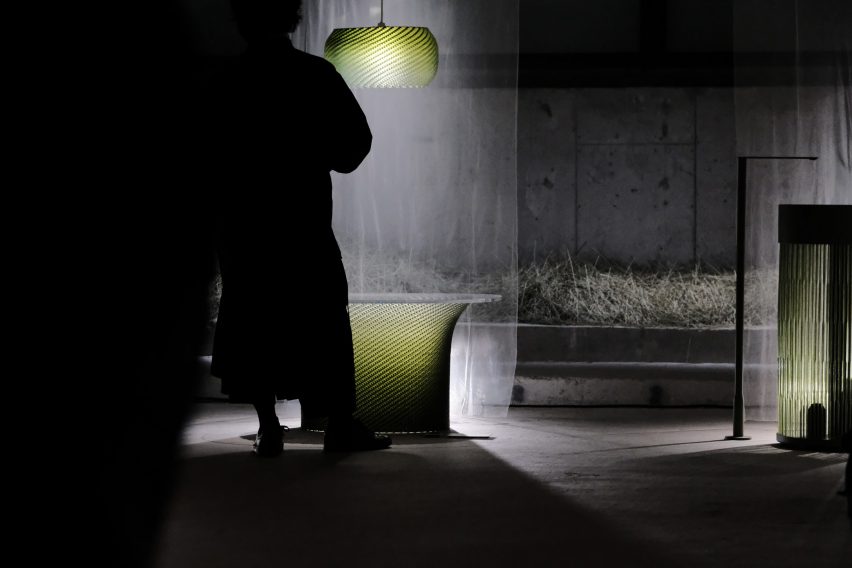
Lighting patterns that have been exhibited incorporate a basket-like lampshade, the design of which recollects regular Japanese lantern mild designs, by designer Ryo Suzuki.
Designer Shinnosuke Harada also developed a lights piece. Named Taba, it was shaped like a horizontally hung bundle of sticks certain in the centre and at possibly conclusion, which references how Igusa grass was transported in advance of being woven.
Fujiwara Kazuki, an additional contributing designer, also made a lampshade – named Ami – that has a sparse, nest-like influence attained by dripping the resin from over.
He also created a matching stool, which has a likewise criss-cross outcome seat atop a layered, barrel-like system.
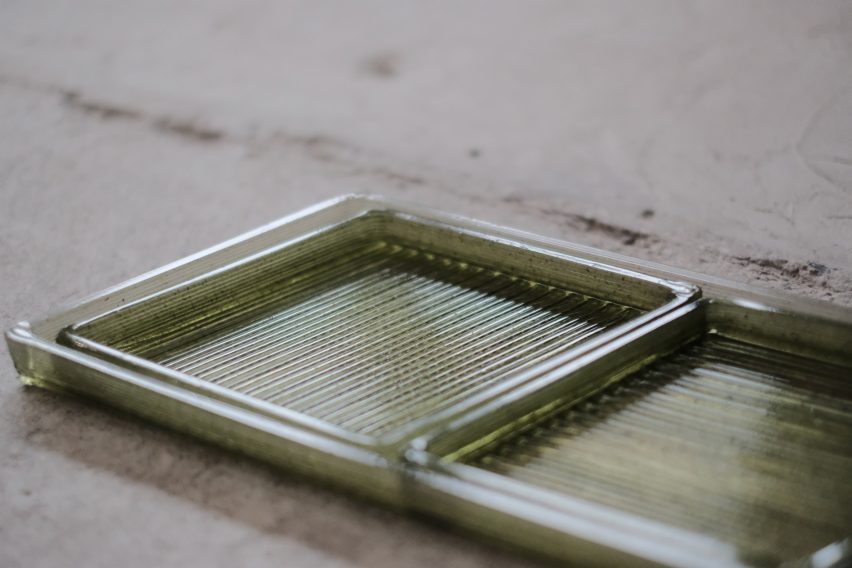
Other stools in the assortment contain Chigusa by designer Shoichi Yokoyama, which was dependent on the silhouette of standard Japanese Sen-suji saucers.
Yocell – a stool built by Moritaka Tochigi – featured a faceted star-shaped seat knowledgeable by Asanoha, a geometric pattern typical in Japanese crafts.
Every single of the 6 shapes can be moved in isolation and then sure back with each other by two rigid hexagonal binders.
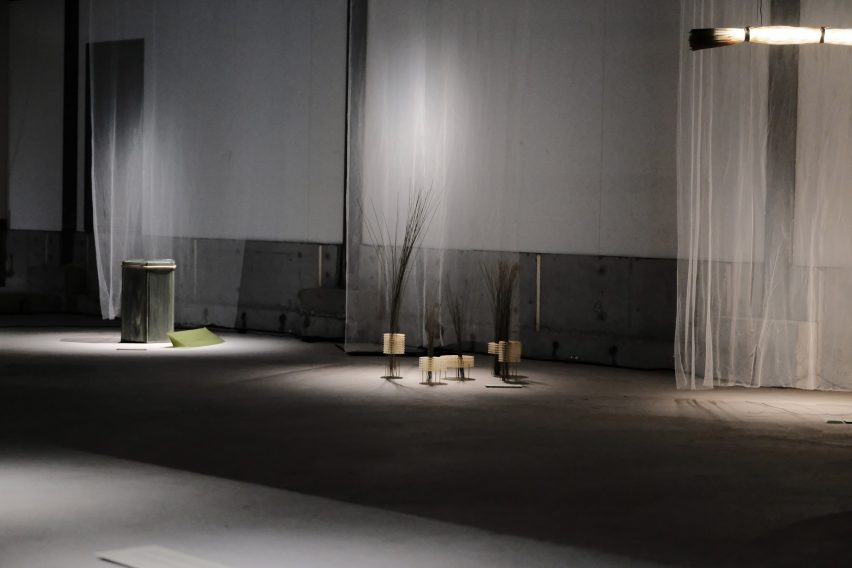
Other products introduced at the exhibition involve a lower table with a 3D printed foundation that widens to assistance a distinct tabletop, also intended by Ryo Suzuki.
Designer James Kaoru Bury created the freestanding Tachiwaki basin, which features a detachable 3D-printed panel to obscure saved products beneath the sink.
Lastly, a lattice-like framework for arranging flowers was made by designers Shinnosuke Harada and Moritaka Tochigi, based mostly on the physical appearance of Japanese architecture.
“We made a collection of furnishings to re-embed Tatami into modern-day daily life applying 3D printing technology and recycled products,” mentioned Honoka. “We will continue to inherit the culture of tatami to the up coming technology.”
All of the parts are accessible to order.
Honoka is a style and design lab shaped of 6 Japan-dependent item designers, who goal to produce authentic items by way of the use of 3D printing and other cutting-edge manufacturing methods and elements.
Other the latest projects by Japanese designers include things like a picket material that resembles terrazzo by Yuma Kano and Rio Kobayashi’s to start with solo show Manus Manum Lavat.
The pictures is by Sota Kamagai, Megumi Kurokawa and Takaho Nagumo.

